Spotlight on Impact: Climate Edition

We’re excited to bring you Spotlight on Impact. Each Spotlight on Impact takes our readers behind the scenes into one of the four Impact themes that guide Anthos Fund & Asset Management’s work throughout the year. In this edition, we explore Anthos’ Impact Theme of climate.
Why Climate Matters for Impact Investors
Climate change is one of the defining challenges of our time. Rising greenhouse gas emissions, increasing climate volatility and persistent inequalities in access to clean energy are shaping economic and social outcomes across the globe. For impact investors, climate is not only an environmental issue – it is deeply interconnected with human development, economic inclusion and long term resilience. At Anthos, climate is one of our four core impact thematics. Guided by our values of sustainability, human dignity and good corporate citizenship, we view climate investing as a powerful avenue through which we can protect the planet while also improving lives and livelihoods, particularly in emerging markets where the need for capital solutions is most acute.
At Anthos, our climate impact thematic is grounded in expanding access to affordable, reliable and renewable energy solutions, while helping accelerate the energy transition.
Energy sits at the heart of both the climate challenge and the development opportunity. How energy is produced and consumed today drives the majority of global greenhouse gas emissions. At the same time, access to modern energy services underpins almost every aspect of human development – from healthcare and education to employment and productivity. In many emerging markets, limited access to clean and reliable energy continues to constrain economic growth and disproportionately affects women, children and low-income households.
What Impact Looks Like - Addressing Unmet Needs
Despite growing momentum, current levels of investment in clean energy remain insufficient to meet global climate goals. Research by international institutions highlights that capital flows into renewable energy and broader climate solutions need to increase significantly – especially in emerging markets, which receive only a small share of global clean energy investment despite being home to most of the world’s population and some of the highest climate risks. This imbalance reinforces our conviction that climate impact investing must go beyond developed markets and mature technologies. Directing capital to underserved regions, and scaling solutions that combine climate mitigation with access, affordability, and resilience, is essential to delivering a just and inclusive transition.
Climate Impact Investing as a long-term, values-based investor
We therefore see climate orientated investing not only as a pivotal pathway to decarbonisation, but also as a powerful enabler and catalyst of social progress.
In line with our Impact Strategy, we focus on investments that contribute to the following:
• Universal access to affordable, reliable and modern energy services
• An increased share of renewable energy in the global energy mix
• Improved energy efficiency and resilient infrastructure
• Strengthened capacity to adapt to climate related risks and shocks
In practice, this means allocating capital to fund managers whose strategies are explicitly designed to deliver climate solutions through the products and services of their underlying investments. This includes renewable energy generation, enabling infrastructure, and technologies that support energy access and system efficiency, alongside a clear preference for strategies that address financing gaps in emerging markets. We invest across asset classes – public and private – recognising that different parts of the capital spectrum play complementary roles in scaling climate solutions.
Investing for Both Impact and Return
We believe investors don’t have to choose between doing good and doing well. Our approach targets market rate returns while directing capital to scalable, sustainable solutions - across liquid and illiquid strategies - so we can influence at depth (private markets) and at scale (public markets) across both Emerging Markets (EM) and Developed Markets (DM). To date, we have had a preference towards EM, where the need - and the potential for meaningful change - is greatest. The EM markets are home to the majority of the world’s population and face persistent financing gaps that well-designed capital can bridge.
Measuring what matters
As with all our impact thematics, we place strong emphasis on intentionality, measurement and accountability. For climate investments, we engage with our fund managers on key impact metrics such as:
• Renewable energy generated
• Installed clean energy capacity
• Greenhouse gas emissions avoided or reduced
These metrics are complemented by qualitative insights that help us understand how climate solutions are experienced on the ground – by households, businesses and communities. At portfolio level, climate is also a cross cutting theme. We collect climate data across our impact portfolios to support our broader commitment to environmental stewardship and our firm wide ambition to reach net zero by 2040.
Our Theory of Change for Climate - in Plain Language
A Theory of Change sits at the heart of an impact investment thesis. It sets out clearly and transparently how the capital we deploy (inputs) translates into real-world action (activities), measurable progress (outputs and outcomes), and ultimately the long-term impact we seek.
For climate, in simple terms, it looks like this: we begin with a clear conviction that being that access to clean, affordable energy is not only critical to reducing emissions; it is also essential to human development. When we, through our impact funds, invest in renewable power, efficient technologies and resilient infrastructure, we’re not just backing projects; we’re unlocking opportunities. These investments allow promising and innovative solutions to grow and scale, reach more people and strengthen the systems communities rely on every day. As clean energy becomes more widely available, households gain reliable power, local businesses expand, and regions move away from carbon intensive systems. Over time, these changes help reduce emissions, improve energy security and create more inclusive economic growth - especially in places where traditional capital has overlooked the need and the potential. In short: by directing capital where it’s most needed, we help accelerate a cleaner, fairer and more resilient energy future and one that narrows inequalities while protecting the planet. Furthermore, our approach to climate impact reflects a broader insight that is increasingly shared across the impact investing ecosystem: climate solutions and development outcomes are deeply interconnected. Research from organisations such as the Global Impact Investing Network (GIIN) and the Climate Policy Initiative shows that climate investments are most effective when they are designed to deliver measurable environmental outcomes while also supporting economic inclusion, job creation and community resilience.
Climate in Action – Case Study
Around the world, the effects of climate change are felt first and hardest by people with the fewest resources to adapt. In many emerging markets, families still live without reliable electricity, businesses depend on costly or polluting fuels, and entire communities face growing climate risks with limited protection. At the same time, these regions receive only a small fraction of global clean energy investment - despite being where the need and potential impact are greatest.
To bring this to life, below we share the following investment case study of NOA Group. NOA Group is a leading South African renewable energy independent power producer and aspirant trader, empowering commercial and industrial companies. NOA Group, is a portfolio company of Africa Infrastructure Fund IV, the latter being one of the impact funds Anthos is invested in.
Setting the context:
South Africa’s energy and employment challenges
South Africa stands at a critical intersection of energy security, climate transition and inclusive economic growth. While recent improvements in grid stability are encouraging, the structural challenges underpinning the country’s electricity system and labour market remain substantial — reinforcing the importance of scalable, private sector renewable energy solutions.
Key issues in summary:
- Power availability: resilience remains fragile
South Africa’s economy has been constrained by chronic electricity shortages, with regular power shortages causing significant economic damage. While the availability of power has improved in the last 2 years, the availability level is still well below levels required for long-term system reliability and economic growth. Private capital has an important role in stabilizing the grid. - Sustainability of the energy mix: transition urgency
South Africa remains one of the most carbon-intensive electricity systems globally, with coal accounting for ~83% of electricity generation in 2024, while renewables contributed approximately 15%*. International and domestic analyses consistently show that scaling renewable energy is the lowest cost and fastest route to improving energy security while reducing emissions. The International Energy Agency has highlighted South Africa as a market with exceptionally strong solar and wind resources, yet insufficient investment relative to potential. - Unemployment: linking energy transition to inclusive growth
The official unemployment rate of South Africa stood at 32% in 2024, with youth unemployment above 44%, among the highest levels globally. With this bigger picture in mind, the energy transition represents both a risk and an opportunity. Renewable energy projects are labour intensive during construction and create longer term jobs in operations Renewable energy investment can be a meaningful contributor to employment, particularly in regions with limited alternative economic activity. Provinces such as the Northern Cape — already a hub for solar and wind — are positioning renewable energy as a cornerstone of their growth and jobs strategies.
Why does this backdrop matter?
Together, these dynamics illustrate why renewable energy solutions that improve grid resilience, decarbonise the energy mix and support local employment are central to South Africa’s long-term development pathway. It is within this environment that companies like NOA Group operate — responding to real, persistent system constraints while contributing to a more sustainable, reliable and inclusive energy future.
NOA Group – Accelerating South Africa’s Transition to Clean Energy
In 2022, South Africa was facing one of the worst electricity crises in its history. Daily loadshedding, acute capacity shortages and years of underinvestment left businesses unable to operate reliably. At the same time, the country remained overwhelmingly dependent on coal, despite its ambitious long-term climate commitments.
Recognising both the urgency and opportunity, a group of experienced renewable energy leaders partnered to launch NOA Group in December 2022. NOA Group is an independent power producer and energy trader designed to help South African businesses secure clean, affordable and dependable power - supporting the country’s transition toward a Net Zero future.
A key enabler of this model was a major regulatory shift in July 2022, which allowed private companies to generate electricity without a license and supply multiple customers through wheeling - using the national grid to deliver power even if they don’t own the transmission infrastructure - already common practice in many developed markets, however a new development and opportunity for South Africa.
NOA Group became one of the first companies to build an aggregation model, bringing together a diverse portfolio of wind, solar and battery storage projects and offering electricity to private companies through a single trading platform.
This innovation makes it easier and faster for companies to adopt renewable energy at scale.
The aggregation model delivers several important benefits:
- Greater reliability, by blending different technologies and locations to smooth out fluctuations in supply.
- Lower costs, allowing smaller businesses to access large scale renewable projects located at South Africa’s strongest resource sites.
- Flexible contracts, with power purchase agreements as short as one year—far more accessible than the traditional 15-year commitments.
NOA Group is therefore helping unlock a much-needed energy transformation, and in doing so, has seen significant demand for competitively priced clean energy solutions, resulting in materially outperforming initial 5-year forecasts within just 2 years of operations.
Source: NOA Group
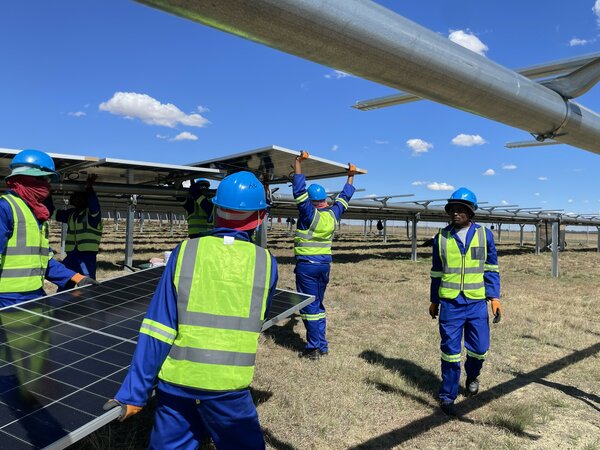
Key data points evidence the powerful impact NOA Group is already making: NOA Group has produced 162,018 MWh renewable energy since 2023, powering the equivalent of approximately 49,000 households and this is likely to increase significantly given the number of projects currently in construction phase. The number of employees as of 31 December 2026 was 212, with females representing 21% of the workforce and with almost one third of NOA Group top management also female.
"Leading ESG for NOA has been a fulfilling and rewarding experience, the NOA approach to Sustainability is a balanced blend of compliance, innovation and inclusive practices. We’ve been intentional in our approach to local job creation and the inclusion of small businesses as we understand and value their contributions to the creation of long-term jobs."
Celiwe Mabaso, Head of Sustainability, NOA Group
NOA Group therefore represents a significant step toward a cleaner, more resilient and more competitive energy future for South Africa.
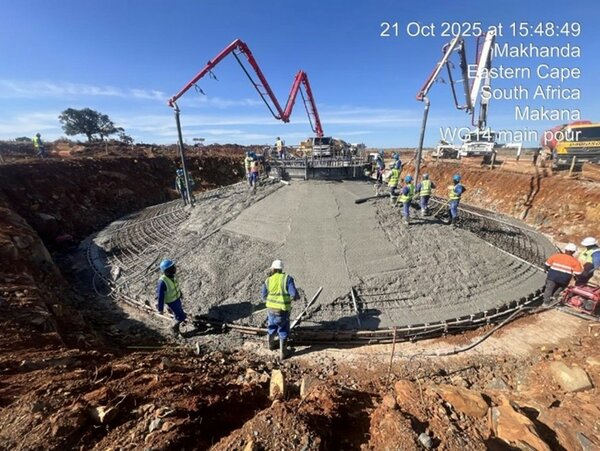
Image: Turbine Foundation Pour
Source: NOA Group, as of 21 October 2025.
Looking ahead
Climate remains a rapidly evolving impact theme. As technologies, policies and markets develop, so too will the opportunities for investors to contribute to meaningful and measurable change. At Anthos, we will continue to deepen our climate research, engage with our managers and refine our approach – always guided by our mission to address unmet needs for people, communities and the planet by providing access to essential products and services that are affordable and of good quality.
Interested in our other Spotlights on Impact?
For Healthcare follow the link.
For Financial Inclusion please follow the link.
For Education please follow the link.